Team Talks: Shegetha Gunasekar
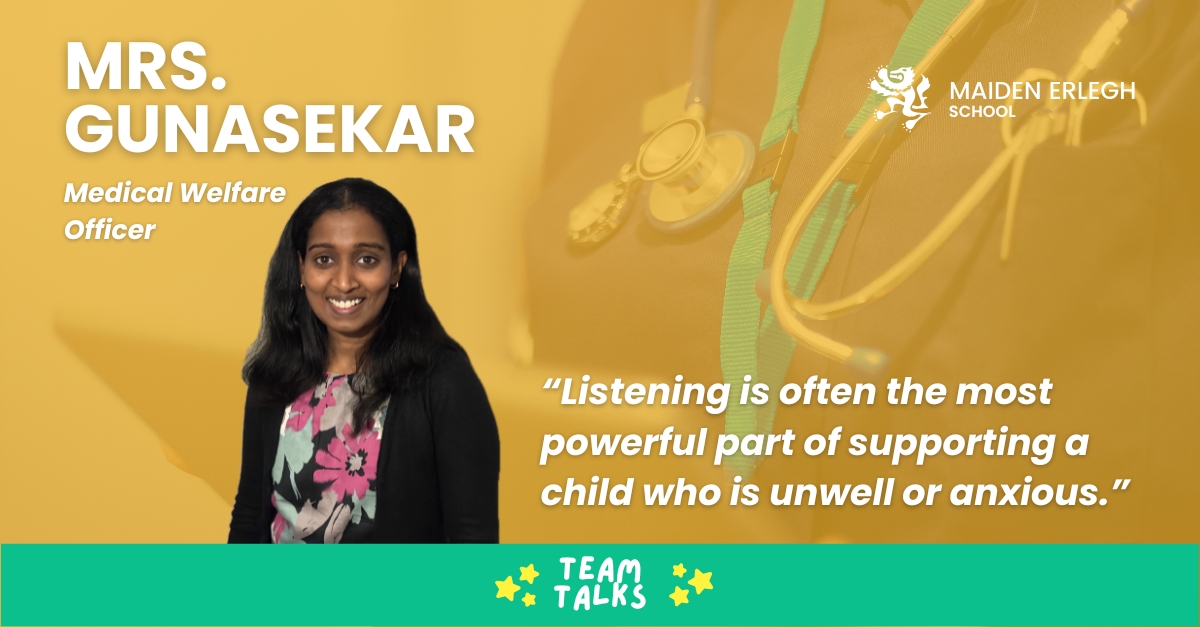
Shegetha Gunasekar is the Medical Welfare Officer at Maiden Erlegh School, where she provides day-to-day first aid, manages medical needs across the site, and ensures that emergency and routine health provision is safe, well-organised and responsive. Her role combines clinical care, calm reassurance, detailed record-keeping and close communication with parents, teachers and pastoral staff.
Q: What is your role?
A: My day-to-day role as Medical Welfare Officer is to maintain a safe and prepared environment for providing first aid care. This includes checking and restocking first aid kits, AEDs and emergency supplies so they are always available and up to standard. I provide immediate first aid for injuries or illnesses that occur in school, from minor cuts and grazes to more serious medical needs. I document all incidents accurately, communicate with parents and follow health and safety policies. I also manage and store medication to required standards and liaise with the school nurse and immunisation team. I enjoy every aspect of my role.
Q: You were identified for Team Talks by your colleagues. Please tell us why this work matters to you.
A: This work is important to me because I am passionate about medicine and enjoy supporting students in moments when they need care. Knowing that I can be there for a student who needs attention is the best part of the job. My experience and empathetic nature help me understand who needs medical care, who may need emotional support and who may simply need guidance to return to their learning.
“Being able to offer calm, reassuring care in moments of need gives me a strong sense of purpose.”
Q: What motivates you to keep pushing this work forward?
A: The responsibility I carry as a first aider motivates me. Knowing I can make a real difference when students need support is highly rewarding. I enjoy engaging in small conversations with pupils during care. Providing comfort and reassurance gives me purpose, and the support I receive from colleagues and the leadership team encourages me daily.
Q: What has helped shape your approach? What have you learned along the way?
A: I have learned that communication and connection are key, especially with younger students who may feel anxious or embarrassed about being unwell. When I first started, I focused heavily on the medical side. Over time, I learned to listen more. Sometimes what a student needs most is to feel heard and cared for.
“Listening is often the most powerful part of supporting a child who is unwell or anxious.”
Q: Which MET value connects most strongly to your work and why?
A: Aiming high is important, because even though this is first aid, it is about maintaining high standards of care and ensuring students feel safe and supported. Working Together is essential. I communicate constantly with teachers, parents and pastoral staff to make sure every student receives the right support. It is a team effort and collaboration makes a positive difference.
Q: What advice would you give to colleagues interested in similar work?
A: This role needs a genuine commitment to caring for students and being highly organised so you can respond promptly. It is important to communicate openly with parents, teachers and staff, and to document everything so care remains transparent and accurate.
Q: Any final thoughts or reflections?
A: A good first aider does not just care for injuries; they care for people. Being there in someone’s moment of need with kindness and composure can make all the difference.
Thank you, Shegetha, for sharing your work with us in this Team Talk.
#TeamMET #StudentWellbeing #MedicalWelfare #SchoolHealthSupport